Most websites don’t turn visitors into paying customers—that’s where many businesses lose out. Your site needs more than just looks; it requires a smart custom web design focused on boosting website conversion. In this post, you’ll find seven proven strategies from Defyn Digital that sharpen user experience and build a digital strategy that drives real results. Connect with Defyn Digital today to transform your website into a conversion powerhouse! For more insights, check out this guide on converting website visitors into customers.## Boosting Website Conversion
Every click on your site should bring users closer to becoming loyal customers. Let’s explore how user experience and a tailored digital strategy can fuel your success.
Focus on User Experience
Your website should be easy to use and engaging. Visitors want fast load times and simple navigation. A clear layout helps them find what they need quickly. Did you know that pages loading in two seconds have a bounce rate of only 9%? Focus on removing any barriers for your visitors. Keep your design clean and your content relevant. This approach makes your website more inviting and keeps people coming back.
Beyond basic design, think about how your content speaks to your audience. Use language that resonates with them. It’s about building a connection. Personal touches can make all the difference. Consider adding testimonials or reviews from satisfied customers. This not only builds trust but also encourages new visitors to become part of your community.
Tailored Digital Strategy
Your website needs a strategy that fits your brand and goals. Start by knowing your audience. What do they need? What problems are they trying to solve? When you understand this, you can create content that speaks directly to them. This is how you turn visitors into customers. Check out this useful resource on designing effective websites.
Tracking your site’s performance is key. Use analytics to see what works and what doesn’t. Adjust your strategy based on data, not assumptions. This ensures you’re always moving in the right direction. Your website should be a living, breathing part of your business that adapts as you grow.
Engaging Web Development
Creating a website isn’t just about putting up a few pages. It’s about crafting an experience that resonates with visitors. Here’s how custom web design and showcasing a success story can make a difference.
Custom Web Design Tips
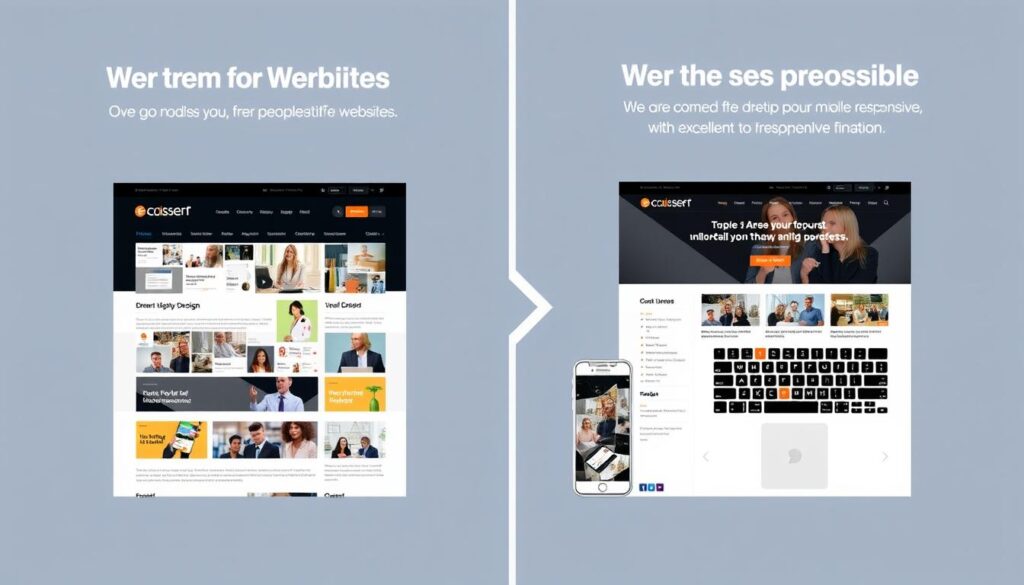
Think of your website as a canvas. The design should reflect your brand’s personality. Custom web design allows you to stand out in a crowded market. It’s not just about looks; it’s about function too. Ensure your site is mobile-friendly. More than half of all web traffic comes from mobile devices. A responsive design keeps users engaged, no matter what device they’re on.
Colours, fonts, and images should all work together to tell your story. But remember, less is often more. A cluttered site can overwhelm visitors. Keep it simple and focused. Highlight key information and make your calls to action clear. Your design should guide visitors to take the next step, whether that’s making a purchase or reaching out for more information.
Defyn Digital Success Story 🚀
Defyn Digital recently transformed a local business’s online presence. Their site was cluttered and outdated, leading to high bounce rates. After a redesign focused on user experience, they saw a 30% increase in conversions within just three months. This success shows the power of thoughtful design and strategic planning. To read more about effective web design, visit Design Studio.
Before: High bounce rate, low engagement
After: 30% increase in conversions, improved user retention
The key takeaway? A well-designed website is more than just a pretty face. It’s a powerful tool for driving business growth.
Drive Customer Engagement
Your website is a powerful tool for connecting with customers. To truly engage, you need to build trust online and use effective call-to-action strategies.
Building Trust Online
Trust is the cornerstone of any relationship. Online, it starts with transparency. Display clear contact information and a straightforward privacy policy. Customers want to know who they’re dealing with. Consider adding a live chat feature to answer questions in real-time. This personal touch can reassure visitors that you’re there to help.
Social proof is another powerful tool. Showcasing customer reviews and testimonials builds credibility. Most customers are more likely to trust a business with positive reviews. Don’t underestimate the power of an “About Us” page either. Sharing your story helps visitors relate to your brand on a personal level.
Call to Action Best Practices 🎯
Your call to action is where the magic happens. It’s the moment you guide visitors to take the next step. Keep your CTAs clear and compelling. Use action-oriented language like “Get started now” or “See for yourself”. Placement is crucial—position your CTA buttons where they’re easy to find but not intrusive.
Repetition is key. Don’t just have one CTA on your homepage. Integrate them throughout your site. This keeps visitors engaged and encourages them to act. Remember, the longer they wait, the less likely they are to convert. For more tips on creating engaging websites, visit Engenius Web.
Here’s the key insight: Without a strong call to action, your visitors might leave without a second thought. Guide them confidently toward becoming customers.
Feeling inspired? Talk to us at Defyn Digital to transform your site into a conversion powerhouse. Your success story is just a click away.
We know how flatlining progress feels — the late nights, the unanswered tickets, the missed launch dates. We’ve stepped in for teams that hit the same wall and helped them move forward with calm, clear plans.
We’re a Sydney-based team focused on building high-performing shopify stores that convert and scale. Our agency blends sharp design and deep platform knowledge so your business gets a website that looks great and drives revenue.
We scope, implement and optimise with clear milestones, transparent communication and measurable outcomes. Whether you’re launching a new store or upgrading, we act as an extension of your internal team to deliver fast, reliable results.
Key Takeaways
We stabilise stalled projects and remove roadblocks quickly.
Clear milestones and measurable outcomes guide every engagement.
We prioritise clean UX, performance and search visibility early.
Services cover strategy, design, development and long-term optimisation.
Contact hello@defyn.com.au for urgent triage or a full audit.
Defyn’s Shopify Sydney value proposition for Australian businesses
Defyn delivers platform-first ecommerce builds designed for Australian businesses and real‑world growth. We tailor store setup, compliance and payment flows to local rules so your site launches with confidence.
Our team focuses on performance and maintainability. That means best-practice development, clear documentation and a single delivery team that knows your customers and business goals.
We design to convert. Clear hierarchy, persuasive content and a friction-free checkout lift revenue without adding complexity.
Robust platform foundations that scale without rework.
Solutions that automate repetitive tasks and cut total cost of ownership.
Commercially focused services that prioritise the work that moves the needle.
Need
Our way
Benefit
When to contact
Local compliance
Tailored store setup
Fewer disruptions at launch
Before go-live
Stalled project
Stabilise and continue
Minimal downtime
Any stage of a project
Long-term growth
Maintainable development
Lower support costs
During planning
If customisation has stalled or your developer is blocking progress, email hello@defyn.com.au for hands-on support.
Shopify Sydney
We align technical decisions with commercial goals to get your store selling sooner.
We specialise in shopify for local brands, adding context to payments, fulfilment and customer journeys. Our team maps how Australian customers browse and buy, then configures your online store to match those habits.
We pair platform features with your roadmap so you unlock value quickly without excessive custom code. Need a migration? We plan data mapping, URL redirects and SEO preservation to protect traffic.
Developer collaboration: we liaise with your internal developers or partners for clear technical ownership.
Multi‑channel: store settings, shipping and taxes set for Australian growth.
Maintenance: performance baselines, uptime monitoring and error reporting for peak demand.
Challenge
Our focus
Immediate benefit
Migration risks
Data mapping & redirects
SEO and traffic preserved
Over‑customisation
Config vs code advisory
Lower technical debt
Peak load
Monitoring & error alerts
Reliable site uptime
Design, development and support under one roof
A single team handles creative design, technical development and post-launch care to keep your site selling.
Shopify design that’s conversion-led and mobile-first
We craft mobile-first design systems that highlight your value and remove friction for customers.
Our designers turn research into simple UI patterns that guide shoppers to checkout while keeping brand character.
Best-practice Shopify development for performance and SEO
We build with clean theme architecture and SEO-friendly templates so your pages index and rank well.
Structured data and accessible components are standard. That gives rich results and better search visibility.
Performance techniques — image optimisation, asset bundling and render path improvements — lower load times and improve conversions.
Ongoing support to keep your site fast, secure and sales-ready
Post-launch, we maintain the site with security best practices and minimal third‑party risk.
We set up tracking, testing and documentation so your team knows what was built and why it matters.
If your current developer can’t deliver the design and development quality you expect, email hello@defyn.com.au — we’ll take it from here.
Evaluate whether functionality belongs in an app, custom extension or theme change.
Hardening and compatibility checks aligned with platform guidelines.
Rapid triage and stabilisation for urgent shopify website issues.
Why choose Defyn as your Sydney-based Shopify partner
When delivery matters, you want a team that pairs technical skill with practical commercial sense. We act as your local agency and advisor, keeping projects clear and accountable.
Local Australian team with long-term client relationships
We build lasting partnerships. Our people work closely with clients to protect brand value and budgets. That means faster feedback, real-time collaboration and a predictable cadence of delivery.
Technical rigour aligned with Partner Program standards
We follow current platform guidelines. That keeps our developers up to date with innovations and best-practice development. The result is maintainable code, smoother upgrades and fewer surprises.
Maintainable, reviewed code from experienced developers.
Clear technical handovers and documentation for operations teams.
Practical expertise across theme engineering, app integration and data integrity.
Open collaboration with your internal stakeholders and vendors.
Benefit
What we deliver
Why it matters
Faster launches
Local coordination and clear processes
Reduced time-to-market and quicker ROI
Lower risk
Partner-aligned development standards
Better maintainability and fewer regressions
Trusted advice
Transparent roadmap and candid trade-offs
Clients highly recommend our pragmatic work
Custom Shopify app development and integrations
Technical integrations and tailored apps let your business automate repetitive tasks and scale confidently.
We connect your commerce platform to the systems that run your business. Common work includes linking ERPs, CRMs and 3PLs, and building private apps when off‑the‑shelf options miss required functionality.
From ERP connections to fit-for-purpose private apps
We evaluate whether a native connector, an app store solution or a private app best fits your roadmap.
When custom development is needed, we design resilient data flows so products, inventory and orders stay accurate.
Automation that scales your store operations
Automation reduces manual handling and frees your team for higher-value tasks.
Optimise sync schedules and payloads for near real‑time accuracy.
Include error handling and observability so issues are easy to diagnose.
Minimise permission scopes and document endpoints and failure modes for clarity.
Need
Our approach
Benefit
When to engage
ERP mapping
Resilient data contracts and transforms
Accurate products and stock levels
Before migration or inventory sync
Unique functionality
Private app development
Extend store capability without upgrade risk
When off‑the‑shelf apps fall short
Stalled app build
Stabilise and finish development
Reduced downtime and clear roadmap
Any stage of a project
Operational scale
Automation and monitoring
Lower manual errors and faster fulfilment
When volume or complexity grows
If your current integration or app build is stuck, contact hello@defyn.com.au — we’ll assess, stabilise and deliver.
Customer-first UX and the buying journey
We design every interaction so customers find answers and complete purchases with confidence.
First, we map the buying journey from the initial impression to post-purchase and remove friction at each step.
Pages answer core questions quickly — sizing, shipping, returns and social proof sit where users expect them. That reduces hesitation and support tickets.
On mobile we prioritise thumb-friendly controls, clear CTAs and a distraction-free checkout to keep conversions high.
Use analytics and session replays to find where customers drop off and why.
Simplify navigation, search and filters so users locate products fast.
Test alternative layouts and messages to learn what improves ecommerce outcomes.
Treat accessibility as good design: legible type, contrast and keyboard support.
Post-purchase flows reinforce trust with timely updates and simple returns processes.
The result: your website becomes a dependable guide for buyers, not just a catalogue.
Stage
Action
Immediate Benefit
Metric
Discovery
Clear landing content and filters
Faster product findability
Search success rate
Decision
Concise product answers and trust signals
Higher add-to-cart conversion
Cart conversion rate
Post-purchase
Timely updates and easy returns
Lower support volume
Repeat purchase rate
Platform advantages you can leverage today
Built-in services mean fast access to inventory tools, security updates and vetted integrations. That combination lets your team focus on trading and growth rather than daily ops.
Inventory management that’s simple and reliable
Inventory tracking is straightforward and works across channels and fulfilment locations. Teams can reduce oversells with clear stock flags and location-aware syncing.
Security, performance and scalability out of the box
The platform provides secure hosting and elastic scaling for peak trading. Patches and updates are applied centrally so your site stays protected with minimal effort.
Leaning into the App Store for added functionality
Thousands of vetted apps accelerate payments, marketing and operational solutions. We prioritise native features first and select apps that are reliable and cost-effective.
Secure hosting and auto-scaling for traffic spikes.
Simple inventory management across channels and locations.
Vetted apps to expand features without heavy custom builds.
Operational workflows configured so your team spends less time on admin.
The result is a stable, adaptable and secure store that’s easier to operate and faster to enhance.
Pricing plans and when to consider Shopify Plus
Choosing the right plan shapes costs, features and how quickly your online store can scale.
We help businesses match plan capabilities to real needs so you don’t over‑pay early or get stuck later. All standard tiers support unlimited products, so catalogue size alone won’t force an upgrade.
Basic, Shopify and Advanced — matching features to your stage
Basic covers new stores with essential selling tools and simple reporting.
Shopify adds better reporting, more staff accounts and improved shipping features for growing operations.
Advanced is aimed at businesses that need advanced reports and lower transaction fees as revenue rises.
We match plan features to your current stage to avoid over‑spend while keeping a path to scale.
We assess total cost of ownership, including app subscriptions and management overhead.
We forecast growth triggers so stakeholders know when a move to Plus is justified.
When high-volume retailers benefit from Plus and B2B
Plus targets high‑volume retailers. It adds B2B features, advanced automation and customisation suited to complex operations.
For wholesale or multi‑channel businesses, Plus can consolidate management and reduce manual work.
Plan
Best for
Key advantages
When to upgrade
Basic
New stores
Low cost, core ecommerce features
Starting revenue and simple ops
Shopify
Growing businesses
Enhanced reports, more staff accounts
When you need better analytics and workflows
Advanced
High-growth retailers
Advanced reporting, lower fees
Higher transaction volumes
Plus
Enterprise & wholesale
B2B, customisation, automation
Complex operations or high volume
If you’re unsure which pricing option fits, we’ll review your data and recommend the right path, balancing immediate needs with a clear roadmap to scale.
Payments, POS and omnichannel selling
A reliable payment setup and resilient POS keep your store trading during busy hours.
We configure gateways that balance fees, reliability and checkout UX for Australian customers. Where non‑Shopify gateways are chosen, we factor in additional service fees so there are no surprises.
Gateway choices and fee considerations
We enable wallets and accelerated checkouts to lift mobile conversion and repeat purchases. We also monitor authorisation rates and chargeback trends and optimise gateways when needed.
POS: standard vs Pro for in‑store sales
We implement the included POS and assess if POS Pro’s advanced features justify the cost. For omnichannel, we keep in‑store and online inventory in sync so customers buy confidently across channels.
Tax, shipping and fulfilment: rules tailored for national stores.
Staff training: POS workflows, refunds and exchanges to reduce friction.
Peak readiness: prepare systems for extended hours and foot-traffic spikes.
Need
Our action
Benefit
High foot traffic
POS performance tuning
Fewer transaction delays
Cross-channel sales
Inventory sync
Accurate availability
Fee visibility
Gateway selection
Lower cost per sale
Speed, SEO and structured data baked into your build
Performance, semantic markup and reliable data flows are core to our web builds. We treat speed and search as features, not afterthoughts.
We architect themes for speed: lean templates, minimal blocking scripts and optimised images. That lowers load times and helps Core Web Vitals.
Technical SEO is standard — schema.org structured data, semantic headings and canonical tags protect visibility. We configure redirects and sitemaps to preserve equity during rebuilds or migrations.
Our shopify development approach includes performance budgets and regression checks in the release process. We document SEO-critical elements so your team knows what not to break when editing the site.
Analytics and consent frameworks set up for accurate, privacy-compliant data.
Content models separate design from data to keep edits fast and reliable.
Ongoing monitoring and low-dependency solutions keep organic traffic stable.
Result: measurable speed gains, cleaner search indexing and a maintainable development workflow that supports long-term growth.
Marketing integrations to drive growth
We bridge commerce data and automation so every message reaches the right customer at the right time.
Connecting with automation platforms for smarter campaigns
We connect your store to leading marketing platforms such as dotdigital to run lifecycle campaigns, segmentation and personalisation driven by real behaviour.
Our aim: reduce wasted spend and lift ROI by making marketing data-driven and repeatable.
Single customer view for email, SMS and on-site personalisation.
Structured events and attributes so segments match real customer value.
Attribution tracking that measures ecommerce impact, not vanity metrics.
Consent capture, preference centres and deliverability hygiene included.
We vet apps for performance, data handling and vendor reliability.
Need
Service
Immediate benefit
Lifecycle marketing
Automation platform integration
Higher recoveries and repeat purchases
Data accuracy
Event modelling & server-side tracking
More reliable measurement
Speed to campaign
Campaign-ready website content blocks
Faster launches without dev tickets
We train your team to run always-on programs. If you prefer, we operate the stack initially and transition it to your people when you’re ready.
Data-driven redesigns and site migrations
A clear data map and staged testing make complex redesigns predictable and safe.
We begin with analytics and research to decide what to keep, improve or retire. That research shapes information architecture and content strategy built around real user behaviour.
We prepare data mapping for products, customers and orders so integrity holds after migration. URL redirects and canonical rules are planned to protect rankings and referral traffic.
Staging environments and structured QA catch issues before customers see them. Our development team resolves edge cases like metafields, bundles and legacy variants.
We coordinate with stakeholders so the project lands with minimal downtime.
Post-launch monitoring checks traffic, conversion and indexation trends.
We create a rollback plan to minimise risk if a rapid recovery is needed.
If you’re moving to a shopify website from another stack, we’ll protect your store’s momentum. Our process balances technical development with commercial sense so clients keep selling during the transition.
Quick-turn services to launch faster
When hours count, we concentrate effort into short, productive sprints that deliver value. Our approach compresses planning and execution so you can get a website live without lengthy roadblocks.
Focused design and development sprints for rapid go-live
One-day intensives pair a senior designer and developer for a focused build. Scope is limited and agreed up front so decisions happen fast and quality stays high.
We align scope to commercial outcomes and lock priorities before the sprint.
Typical work covers key templates, navigation, payment setup and essential apps for launch.
Content needs are prepared in advance to maximise productive hours on build day.
Post-sprint support stabilises the site while we refine features from real user data.
“We schedule timeboxed milestones and a clear checklist so stakeholders know exactly when progress lands.”
If you need a rapid launch or recovery, email hello@defyn.com.au — we’ll schedule a focused sprint to get you live.
Service
Typical duration
Immediate benefit
One-day design intensive
8–10 hours
Launch-ready templates and assets
Rapid development sprint
1–3 days
Essential functionality live fast
Post-launch support
72 hours
Stabilise and monitor performance
Industries and store types we support
We design category-specific store experiences that match how customers shop and decide.
Our team has built sites for fashion, beauty, lifestyle, homewares, food & beverage and specialty retail. Each project starts by mapping how customers browse products and complete purchases.
For regulated lines we add compliance checks, age gates and restricted-shipping rules so you meet obligations without blocking sales.
We support B2C and D2C businesses with merchandising, bundling and flexible promotions. Subscription models and repeat-purchase flows are configured to make revenue predictable.
Marketplaces and multi-brand stores get catalogue management and faceted navigation to surface products fast. We consider fulfilment realities early — lead times, split shipments and preorders are handled smoothly.
Designers tailor UX patterns to category expectations and trust signals so your website converts better.
Store type
Primary focus
Immediate benefit
Fashion & Beauty
Visual merchandising, size guidance
Lower returns, higher conversion
Food & Beverage
Perishable rules, delivery slots
Accurate fulfilment and fewer complaints
Marketplaces
Catalogues & faceted search
Faster product discovery
Subscriptions
Repeat billing and lifecycle flows
Predictable revenue
International growth: staged multi-currency rollouts.
Trust signals: category-specific badges and content.
Growth paths: bespoke plans for products and industries.
Project delivery process — from brief to launch (present)
We organise discovery, design and development into focused stages so stakeholders stay aligned.
Discovery and scope
We clarify goals, constraints and measurable outcomes early. That reduces surprises and gives the whole team a shared plan.
Design systems, prototyping and theme selection
Our designers prototype core flows, test patterns and pick themes that fit your roadmap.
Component systems make the site consistent and faster to iterate over time.
Development, QA and performance hardening
Development is sprint-based with demos and transparent burndown so feedback lands quickly.
QA covers devices, browsers, accessibility and performance budgets before launch.
Launch, handover and training
Launch plans include checklists, rollbacks and monitoring for a calm go-live.
Handover bundles training, video guides and admin best practices so your team owns day-to-day management.
Post-launch hardening addresses edge cases fast and keeps momentum up. We favour a pragmatic way of working — focused, collaborative and time-aware.
Stage
Who leads
Primary outcome
Time focus
Discovery
Project lead & designers
Scope, acceptance criteria
Weeks 0–1
Development & QA
Developers & QA
Working site, performance budgets met
Sprints, continuous
Launch & handover
Project lead & operations
Go-live, training and support plan
Launch day + 2 weeks
Post‑launch support, SLAs and after-hours coverage
We back your site with hands-on support so issues never interrupt trading.
We provide structured support with agreed SLAs that define response times and priorities. Choose business-hours response or extended after‑hours coverage for campaign peaks.
Flexible options suit different teams and budgets. Retainers, blocks of hours or ad‑hoc services let you scale support as needs change.
We monitor uptime and errors so problems are fixed before customers notice.
Safe updates, dependency checks and regression testing protect your website.
Clear escalation routes and communication protocols keep you informed.
Coverage
Response SLA
Best for
Business hours
4–8 hour response
Day-to-day ops
Extended hours
2–4 hour response
Campaigns & sales
After‑hours on-call
1 hour critical response
High-traffic events
Blocks & retainers
Flexible scheduling
Ongoing optimisation
We also produce regular reports on tickets, response times and recurring themes to drive continuous improvement. Training and knowledge base articles reduce repeat issues and empower your customer support.
If you need responsive support or after‑hours coverage, email hello@defyn.com.au — we’ll tailor an SLA to suit.
Proof of results and what clients say
We measure success by the changes teams can see. Buyers highlight responsiveness, clear knowledge and a willingness to go the extra mile as the top reasons they recommend us.
Here’s what our growth-focused partners value most:
Highly recommended by growth-focused ecommerce brands
Clients tell us they highly recommend partners who combine speed with precision and accountability.
We deliver transparent roadmaps and predictable delivery that lift conversion and AOV.
Our developers explain options clearly and propose the most effective path.
Case outcomes include faster load times, improved organic visibility and higher checkout completion.
Stakeholders praise proactive communication and a readiness to tackle complex integrations.
We document before-and-after metrics so teams can see exactly what changed and why it matters.
Post-launch, we stay engaged to iterate based on data rather than opinion.
We collaborate with internal teams, respecting constraints while pushing for the best result.
Our work ethos is simple: do it once, do it right, then optimise — and clients highly recommend that approach.
If you want a similar experience, we’ll share relevant examples and the approach that delivered them.
“Our delivery was fast, clear and measurable — the team moved revenue and reduced support tickets in weeks.”
Get help with Shopify customisation today
When customisation stalls, rapid assessment and a pragmatic roadmap restore momentum. We act fast to limit downtime and protect revenue.
Struggling with your developer? Contact hello@defyn.com.au
We provide a focused support service to triage and fix in‑progress work. If your current build is stalled or unstable, we’ll assess, stabilise and deliver a clear recovery plan.
Send context, objectives and access details — we’ll triage and propose next steps quickly.
We can take over an in‑progress shopify website and a live shopify store without starting from scratch.
Expect candid advice, practical options and a timeline that reflects real constraints.
We prioritise urgent fixes first and phase enhancements responsibly to protect SEO, revenue and customers.
Our onboarding is fast: define priorities, lock scope, execute, and report progress.
“We coordinate with your stakeholders to minimise disruption and keep daily operations running.”
Ongoing help is available. Once immediate problems are resolved, we remain available for sustained support and optimisation. Email hello@defyn.com.au — let’s get your website moving again.
Conclusion
We join projects at any stage and deliver pragmatic, measurable outcomes that protect revenue.
Shopify gives you a powerful foundation; we turn it into a competitive advantage for your brand. As your development agency partner, we combine strategy, design and engineering to lift performance and conversions.
From new builds to rebuilds, we guide each project with clear milestones and outcomes. Our approach balances fast wins with sustainable solutions that avoid tech debt.
You’ll launch with confidence — a stable, fast and optimised store. Payments, performance, analytics and operations are configured to best practice from day one.
Ready to move forward? We’re ready to lead the work and deliver results. Email hello@defyn.com.au to fix or finish your shopify customisation and get your shopify website selling again.
FAQ
How can the Defyn team help with my Shopify website?
We design, develop and support high-converting online stores. Our work covers mobile-first design, reliable theme development, custom apps and integrations, payment and POS setup, inventory management and ongoing performance and security support. We take technical complexity off your plate so you can focus on sales and marketing.
What value does Defyn offer Australian businesses?
We combine local market knowledge with technical rigour. Our Sydney-based team delivers tailored solutions that meet Australian payment, tax and shipping needs, while aligning with platform best practice to boost conversion, speed and SEO.
Do you offer both design and development under one roof?
Yes. We provide conversion-led, mobile-first design plus best-practice development, QA and launch services. That integrated approach reduces handoffs, speeds delivery and ensures the final site performs across devices and search engines.
How do you approach Shopify design to improve conversions?
Our designers focus on clear user journeys, persuasive product pages and friction-free checkout flows. We A/B test key pages, optimise calls-to-action and make sure layouts work across mobile and desktop to raise conversion rates.
What development practices do you use for performance and SEO?
We build lightweight themes, implement lazy loading, optimise images and use structured data for rich results. We also follow accessibility and crawlability guidelines to support organic search growth.
What ongoing support do you provide after launch?
We offer support plans with SLAs for updates, security patches, app maintenance and performance monitoring. We provide regular backups, uptime checks and can cover after-hours fixes when required.
Can you build custom apps and integrations for our store?
Yes. We develop private and public apps, connect ERPs, CRMs and fulfilment systems, and build custom APIs to automate workflows. Our focus is robust, maintainable integrations that scale with your business.
How can automation improve store operations?
Automation reduces manual data entry, speeds order routing, syncs inventory and triggers marketing workflows. That lowers errors, frees team time and helps you scale while keeping costs predictable.
How do you design the customer buying journey?
We map buyer personas, optimise product discovery and streamline checkout steps. We prioritise clarity in product information, personalised recommendations and post-purchase communication to increase repeat business.
What platform advantages will we get immediately?
You’ll benefit from built-in hosting, security, PCI compliance, scalable infrastructure, easy inventory controls and a large app ecosystem to extend functionality quickly.
How does inventory management work on the platform?
The platform supports stock levels, multi-location inventory, SKU management and fulfilment rules. We can integrate third-party inventory systems or implement simple, reliable native workflows depending on your needs.
How do you handle security, performance and scalability?
We follow secure coding practices, enable HTTPS and set up backups and monitoring. For performance we optimise assets, use CDN delivery and tune server responses. The platform scales automatically with traffic.
Can the app marketplace help extend functionality?
Yes. We evaluate and implement vetted apps for subscriptions, reviews, loyalty, advanced search and marketing automation—only recommending solutions that meet your business and performance goals.
What pricing plans are available and when should we consider Plus?
There are entry-level, mid-tier and advanced plans that match growing feature needs. High-volume retailers, B2B merchants or organisations needing advanced APIs, higher limits and dedicated support should consider the enterprise-level plan.
How do payments and POS work in Australia?
We configure local payment gateways, advise on fee structures and set up POS or POS Pro for in-store sales. We ensure tax and payment settings comply with Australian requirements and your preferred acquirers.
How do you optimise speed, SEO and structured data?
We implement fast-loading themes, compress assets, add schema markup for products and reviews, and structure pages to support search engine indexing and rich snippets.
Which marketing integrations do you support?
We connect email, CRM, analytics and ad platforms, plus automation tools for lifecycle campaigns. These integrations help with personalised messaging, attribution and growth analytics.
Do you handle site redesigns and migrations?
Yes. We run data-driven redesigns, plan migrations to avoid SEO loss, map redirects and preserve sales history while improving UX and technical performance.
What quick-turn services do you offer for fast launches?
We run focused design and development sprints to deliver a launch-ready site rapidly. These include rapid prototyping, theme customisation and essential integrations for a speedy go-live.
What industries and store types do you support?
We work with retailers, wholesalers, DTC brands, B2B and subscription services across fashion, health, homewares, food and more—tailoring solutions to product and operational needs.
What is your project delivery process?
We start with discovery to define scope, create design systems and prototypes, select or build the theme, complete development and QA, then launch with handover and training for your team.
What post-launch support and SLAs do you offer?
Support packages include response times, monthly maintenance tasks, security updates and optional after-hours coverage to keep the store operational and sales-ready.
Do you have proof of results or client recommendations?
We share case studies and client testimonials that demonstrate traffic, conversion and revenue improvements for growth-focused ecommerce brands. We’re highly recommended by clients who value measurable outcomes.
How can we get help with customisation or if we’re struggling with our developer?
Contact us at hello@defyn.com.au. We’ll assess your store, propose technical solutions or take over development and support with clear SLAs and handover plans.
1 in 3 Australian shoppers say slow checkout stops them from buying — a simple bottleneck can cost your business dearly.
We build fast, conversion‑ready web solutions that solve those blockers. Our Sydney and Penrith team pairs clear design with pragmatic development to launch a reliable website quickly.
We focus on outcomes: cleaner architecture, clearer content and measurable results. That means higher average order value, less friction at checkout and steady traffic growth.
Our approach keeps technical choices simple. You get a dedicated team that explains trade‑offs, integrates essential apps without bloat and protects your brand with thoughtful UI and accessible patterns.
If you’re stuck with customisation issues or need a full site upgrade, email hello@defyn.com.au and we’ll step in to fix problems fast and clearly.
Key Takeaways
We deliver practical solutions so your online store performs from day one.
Our Sydney and Penrith team blends web design and development expertise.
Work focuses on business impact: conversions, speed and stability.
We simplify technical decisions and keep projects moving.
Contact hello@defyn.com.au for fast help with customisation blockers.
Purpose-built Shopify development for Australian businesses, today
Our team crafts commerce experiences that match how Australians search, compare and buy online. We combine web design, ecommerce development and local SEO with managed hosting to meet real market needs.
Transform your online store with design, development and user experience that drives results
We build for the digital landscape today — prioritising speed, clear navigation and checkout flow so more visitors convert. Our approach maps requirements into a simple process with staged milestones.
We tailor solutions for Australian businesses. That means GST handling, location-aware content and shipping logic that fit local rules and customer habits.
Optimised templates let you update content without touching code.
We pick apps that solve real problems and reduce manual work.
Documentation and team training keep your site maintainable after launch.
We monitor analytics and refine layouts in short cycles to improve outcomes.
If today’s customisation challenges are slowing you down, email hello@defyn.com.au and we’ll help you ship improvements without the busywork.
Why choose Defyn for Shopify in Australia
We run a clear, accountable approach that helps Australian business owners move from idea to live store without friction. Our Sydney and Penrith team combines practical design and engineering so work finishes on time and stays maintainable.
Sydney and Penrith-based team with end-to-end web expertise
We cover strategy, design, development, SEO and managed hosting. That reduces handoffs and speeds delivery.
If your current developers aren’t responsive, reach out at hello@defyn.com.au — we’ll take over smoothly and keep your store moving.
From concept to execution: a proven approach for modern eCommerce
Our approach follows clear stages: discovery, planning, design systems, build, QA, launch and optimisation. Each project has a delivery lead and channel expert support so clients always know who to contact.
Fewer, well‑chosen integrations to keep performance high and simplify maintenance.
Documented decisions, transparent updates and time forecasts reduce risk.
Post‑launch support includes SEO, CRO experiments and ongoing hosting management.
Defyn Shopify Development
We translate brand goals into fast, user-focused websites that work for your customers from day one.
Design and engineering aligned with your brand
We pair visual design with a pragmatic development stack so your brand looks cohesive and the site stays stable as traffic grows.
From new website builds to redesigns
Our services cover planning, colour schemes, logo and layout guidance, plus staged reviews and ongoing improvements after launch.
How we deliver projects that perform
We map user goals to functionality so features drive revenue and help customers find products quickly.
Scalable sections and templates reduce reliance on code for everyday updates.
We validate journeys with prototypes, staged reviews and codebase checks if you’re midway through a redesign.
Optimisations to images, scripts and theme structure give every site a strong performance baseline.
Training and handover guides let internal teams manage content confidently after launch.
Whether you’re facing customisation roadblocks or unclear scopes, email hello@defyn.com.au and we’ll stabilise your build.
Shopify design and development services
Our team combines clear visual systems with practical engineering to make your online store simpler to run.
We plan full design and development including colour schemes, branding guidance, layout systems and ongoing maintenance after launch. This keeps the website easy to update and reliable for daily commerce.
Design development: layouts, colour schemes, branding and content
We create a reusable design development system with components that keep visual consistency and speed up build cycles.
Responsive web experiences optimised for conversion and usability
Layouts mapped to business goals and content hierarchy for clearer conversion paths.
Responsive pages that adapt to screens and connection speeds common across Australia.
User experience patterns that reduce add‑to‑cart friction and improve checkout flow.
Feature implementation and custom functionality for unique requirements
Careful app integration that prioritises stability and low script overhead.
Custom features like advanced filtering, bundles and subscription options.
Documented editorial workflows so marketers update content without dev tickets.
“We connect brand assets, copy and media to a system that’s simple for teams to operate.”
Need hands-on help implementing complex design development or content changes? Email hello@defyn.com.au for rapid support and clear next steps.
Conversion rate optimisation for measurable growth
We use real user journeys and analytics to turn visitor behaviour into tangible gains. Our work focuses on quick experiments, solid measurement and practical fixes that improve orders per session.
User shopping analysis to improve order conversions per session
We map funnel drops and session playback to spot where users hesitate. This reveals friction across product lists, the product page and checkout.
We run targeted analysis to prioritise changes that move the needle fast.
Data-led decisions: product, page and checkout enhancements
Our approach pairs clear hypotheses with hard data so decisions are testable and repeatable.
We implement quick wins—clarified CTAs, simplified forms and better page hierarchy—then track the impact.
Actionable CRO work you can roll out today
We analyse funnels and behaviour to remove friction across product, collection and checkout.
Tests use A/B and multi‑variant methods with clean rollbacks and documented results.
Performance tuning improves first interaction and mobile conversion.
Content and microcopy align to user intent to reduce uncertainty at payment and shipping steps.
We deliver a prioritised roadmap balancing high‑impact improvements and low‑effort fixes.
Want actionable CRO changes implemented without delay? Email hello@defyn.com.au and we’ll prioritise fixes that lift conversion.
Shopify migration with white-glove care
A careful migration keeps customers, orders and search rankings intact during a platform move. We treat every transfer as a risk-managed project so your website stays live and revenue keeps flowing.
Seamless transfer of customers, orders and data to your new platform
We run full audits of the source platform and map fields for customers, orders and products. Dry‑runs validate imports and transactional emails so nothing surprises your team.
Risk-managed implementation, redirects and SEO preservation
Audit current platform and define the migration path, including field mapping for customers and orders.
Implementation plan for redirects, URL strategy and metadata to protect SEO equity.
Scheduled migration windows to minimise downtime and clear checkpoints for your team.
Rebuild critical templates to preserve design fidelity and improve performance.
Validate store config—payments, taxes, shipping—and run dry‑runs to catch edge cases.
Document post‑launch checks, provide staff training and coordinate third‑party apps and API keys.
Rollback plan and 72‑hour monitoring to safeguard stability and fast updates.
Planning a move and anxious about downtime or data loss? Email hello@defyn.com.au and we’ll map a risk‑managed migration plan tailored to your business.
Shopify SEO to win organic traffic
Winning search visibility depends on technical fixes and content tuned to Australian intent.
We deliver on‑page SEO, keyword‑optimised pages and technical audits that stop common ranking blockers.
Our work starts with a technical website audit. We fix crawl, index and speed issues that limit visibility.
Keyword‑optimised pages, on‑page SEO and technical foundations
We optimise titles, headings and page structure so each page targets clear search intent.
Product and collection templates get schema and internal linking to boost click‑through rates.
Local SEO focus for Australia with ongoing improvements
Local signals matter. We align addresses, opening hours and region‑specific content to win city and regional searches.
Image optimisation and lazy loading to balance visuals and speed.
Canonicalisation and pagination to reduce duplicate content risks.
Analytics and Search Console tracking to measure impact and find opportunities.
An optimisation calendar that prioritises high‑impact content updates.
“Need SEO foundations fixed or content optimised for Australian search? Email hello@defyn.com.au for an audit and action plan.”
We collaborate with your marketing team to keep content velocity consistent and to turn technical fixes into measurable results.
Ongoing support, maintenance and updates
We keep stores current with routine care and quick fixes to protect sales and uptime.
Continuous improvements: new pages, product changes and layout updates
After launch we provide continuous maintenance so your site stays fresh. That includes new pages, product edits and layout updates without disrupting trading.
We offer a maintenance plan covering content and theme updates so the store stays stable.
Small changes ship quickly—new pages, product tweaks and layout refinements—kept to agreed time windows.
Our developers monitor performance and apply tuning to keep speed within budgets.
We triage issues by impact and complexity, give clear ETAs and rollback options.
Platform and dependency updates are managed to lower security and compatibility risk.
Workflows are documented so your client team can safely handle everyday tasks.
We keep a shared backlog and release notes so you always know what’s shipped and what’s next.
If you’re blocked, whether ’re waiting on another agency or an app vendor, we’ll step in and resolve the problem.
Managed hosting, performance tuning and regular platform updates
We coordinate hosting and third‑party providers to avoid conflicts during updates. Support metrics track response and resolution time so service stays reliable.
Whether you’re struggling with customisations or urgent fixes, contact hello@defyn.com.au and we’ll provide steady, reliable support for ongoing maintenance and updates.
Apps, integrations and architecture
We map app interactions and API flows so integrations add value, not technical debt.
First, we audit your apps to spot overlaps and needless scripts. That reduces costs and improves performance.
Third-party customisation and API implementation
We design and document API implementation for ERPs, 3PLs and marketing tools. Error handling, retries and webhook validation protect core processes.
Need complex API work or app conflict resolution? Email hello@defyn.com.au and we’ll propose a robust integration plan.
Scalable architecture to support features and future growth
Our architecture patterns isolate critical functionality so future features are easier to add. CI workflows validate integrations before release.
Assess app stacks to remove overlap and improve stability.
Load vendor SDKs only when needed and defer non‑critical assets.
Track platform changes and keep customisations upgrade‑safe.
We optimise theme assets, apply responsive image strategies and tune hosting to lift page speed. This improves both conversion and search outcomes for your website.
Our work focuses on measurable wins. We set budgets, monitor Core Web Vitals and prioritise changes that return value quickly.
Fast loading pages for better conversion and search performance
Performance budgets: enforced during development to keep pages lean.
Responsive images: modern formats and lazy loading balance quality and speed.
We minimise third‑party script overhead and replace heavy widgets with native, lightweight alternatives.
Server and CDN tuning improve first byte and consistent loading under traffic.
We instrument Core Web Vitals and link metrics to conversion so fixes are prioritised by ROI.
Template refactors and liquid loop optimisation speed rendering for large catalogues.
Regular tag audits remove redundant trackers; post‑release monitoring prevents regressions.
If slow loading is hurting conversion, contact hello@defyn.com.au for a performance audit and fixes.
Area
Action
Benefit
Assets
Compress, serve modern formats, lazy load
Lower download size, faster render
Scripts
Defer, remove redundant tags, replace heavy widgets
Reduced blocking and improved interactivity
Hosting
Server tuning, CDN configuration
Better first byte and consistent loading
Templates
Refactor loops, simplify logic
Faster rendering on large pages
A transparent process and reliable timelines
Our process turns ambiguous requirements into a practical delivery plan with measurable checkpoints. We outline scope, risk and success metrics so the whole project is predictable and accountable.
Discovery and requirements definition
We start with focused discovery sessions to clarify objectives and capture requirements. This reduces rework and sets acceptance criteria.
Design, development and implementation
Design systems are defined early to speed build time and keep brand consistency. Developers join estimation so timelines are realistic and owned by the team.
Testing, launch and post-launch optimisation
Peer reviews, automated checks and sandbox validation protect live stores. We schedule user acceptance testing and launch windows that suit your business calendar.
Clear communication with developers and clients throughout the project
We maintain a transparent dashboard to track progress, blockers and upcoming releases. Decisions come with impact statements so trade‑offs are clear and documented.
Delivery plan: time‑boxed phases, ownership and acceptance criteria.
Integration safety: sandbox validation before production implementation.
Ongoing work: post‑launch optimisation turns early insights into improvement cycles.
“Want certainty on scope, time and budget? Email hello@defyn.com.au for a clear process and accountable delivery.”
Results that move your business forward
Our work ties brand clarity to measurable web outcomes so your team sees commercial gains fast. We’ve helped ecommerce redesigns and migrations that lift conversion and organic traffic, then provided continuous maintenance to protect those wins.
From brand to build: websites that drive measurable success
We connect brand strategy to a build that prioritises clear outcomes across traffic, conversion and revenue.
Reduce uncertainty and accelerate delivery with a repeatable process.
Launch a new website or scale an existing online store without sacrificing stability.
Improve merchandising and product presentation so value is crystal clear to shoppers.
Create client‑friendly workflows for quick updates, promotions and campaigns.
Show progress with dashboards and regular reporting that link work to commercial results.
Run tailored experiments for your segment rather than generic tests that don’t move the needle.
Work with marketing and operations so changes are feasible and sustainable for your business.
Book a call today to see our pain-free design process in action
Ready to see fast, practical improvements? Book a call or email hello@defyn.com.au and we’ll show how we ship upgrades without the headache. Clients appreciate short feedback loops and clear acceptance criteria that reduce rework and speed value delivery.
“We tailor experiments and reporting so every change links back to commercial success.”
Conclusion
You get a single team that owns the project end‑to‑end and removes blockers fast. We deliver branding‑aligned design and pragmatic development so your website and store work reliably for customers across Australia.
Our approach keeps scope focused and reduces time spent on rework. We engineer performance gains, improve loading and plan features against clear requirements so changes are low risk and measurable.
We manage platform updates, apps and architecture, resolve issues before they affect sales and provide steady post‑launch updates and support. If you’re struggling with Shopify customisation with your developer, contact hello@defyn.com.au — we’ll take ownership and get your store back on track.
Start now, and we’ll move quickly to stabilise your site, complete the project and hand you a maintainable web system that clients and teams can rely on.
FAQ
What services do you offer for building and improving online stores?
We deliver end-to-end web solutions including design, development, responsive layouts, branding, content strategy, custom features, apps and integrations. Our approach covers new websites, redesigns, migrations and ongoing maintenance so the store performs from day one.
How do you ensure a site is optimised for conversion and user experience?
We combine user shopping analysis, data-led testing and CRO best practice. That includes product and page improvements, checkout optimisation, fast loading pages, accessible layouts and clear content that guides customers to conversion.
Can you migrate our store and preserve SEO and customer data?
Yes. We provide a white-glove migration service that transfers customers, orders and product data, implements redirects, preserves metadata and uses risk-managed implementation to protect organic rankings.
Do you handle third-party apps and custom integrations?
We integrate third-party tools, build custom apps and connect APIs to meet unique requirements. Our architecture planning focuses on scalability, performance and maintainability for future feature growth.
What ongoing support and maintenance do you provide?
We offer continuous improvements, product and page updates, managed hosting, performance tuning and regular platform updates. Support plans include monitoring, security patches and quick fixes to keep stores running smoothly.
How do you approach SEO for Australian businesses?
We implement technical SEO foundations, on‑page optimisation and keyword‑focused pages with a local SEO focus for Australia. Ongoing improvements and reporting help boost organic traffic and search performance.
How long does a typical project take from discovery to launch?
Timelines depend on scope. Small builds or theme customisations can take a few weeks. Complex builds, custom functionality or large migrations require longer discovery, development and testing phases. We provide a clear timeline after requirements are defined.
What is your process for discovery and defining requirements?
We run a discovery phase that documents business goals, technical requirements, product data, integrations and user journeys. This creates a roadmap for design, development, testing and launch with agreed milestones and communication points.
How do you measure success after launch?
Success is measured with performance metrics like conversion rate, average order value, page speed, traffic and customer retention. We use analytics and A/B testing to iterate and deliver measurable growth.
Will you provide training and documentation for our team?
Yes. We supply admin training, content guidelines, documentation for custom features and handover notes so your team can manage products, content and basic updates independently.
How do you manage performance and page speed?
We optimise images, implement efficient code, use caching and choose performant hosting. Regular audits and tuning reduce loading times and improve both conversion and search rankings.
What information do you need to provide an accurate quote?
We need details about your products, current platform, required features, integrations, design preferences, expected traffic and migration needs. A discovery call helps us scope the project and deliver a tailored proposal.
In today’s digital landscape, the approach to web design and development can make or break your online presence. Traditional methodologies often create disconnects between design and functionality, leading to extended timelines and budget overruns. At Defyn, we’ve reimagined this process with an integrated approach that bridges these gaps, delivering websites that not only look stunning but perform exceptionally well.
This article explores how our unique methodology differs from conventional approaches and why it matters for your business’s digital success. Whether you’re planning a new website or considering a redesign, understanding these fundamental differences will help you make informed decisions about your digital journey.
Understanding Web Design and Development Fundamentals
The interconnected nature of web design and development
Before diving into methodologies, let’s clarify what web design and development actually entail. While often mentioned together, they represent distinct disciplines with different focuses and skill sets.
Web Design: The Visual and User Experience
Web design encompasses the visual elements and user experience of a website. Designers focus on creating intuitive interfaces that guide users through content while maintaining brand consistency. This includes:
User interface (UI) design – creating visually appealing layouts
User experience (UX) design – ensuring intuitive navigation and interaction
Visual elements – typography, color schemes, imagery, and spacing
Wireframing and prototyping – planning the structure and flow
Responsive design – ensuring the site works across all devices
Web Development: Bringing Designs to Life
Web development involves writing code to implement the design and create functionality. Developers build the technical foundation that powers the website, including:
Front-end development – implementing visual elements with HTML, CSS, and JavaScript
Back-end development – creating server-side logic, databases, and APIs
Performance optimisation – ensuring fast loading times and smooth operation
Security implementation – protecting user data and website integrity
Integration with third-party services – connecting with payment gateways, CRMs, etc.
The challenge for many businesses lies in how these two disciplines interact. Traditional approaches often treat them as separate phases, which can lead to disconnects and inefficiencies. This is where methodology makes all the difference.
Traditional Web Design and Development Approaches
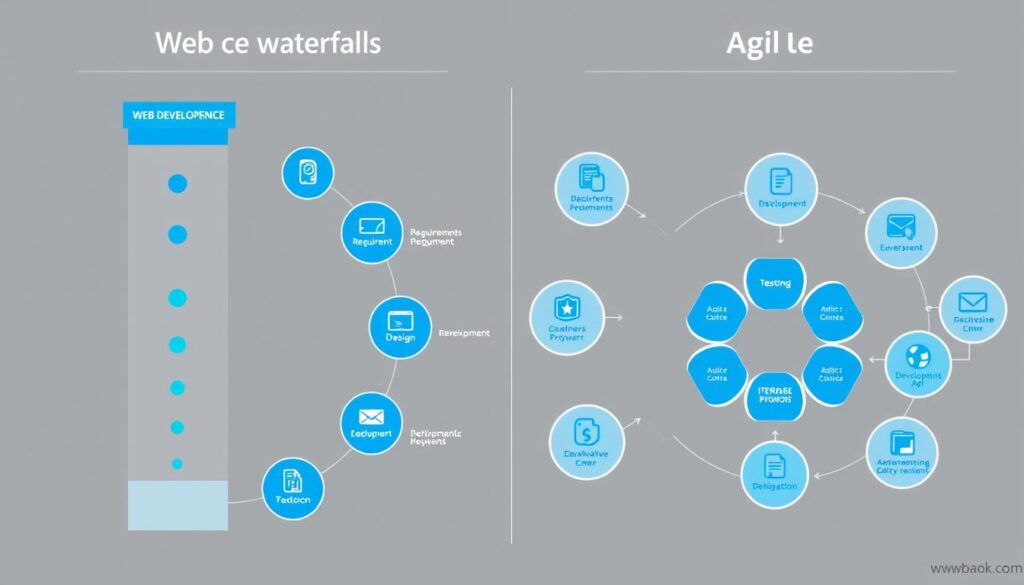
Most web agencies follow one of two primary methodologies: Waterfall or Agile. Each has distinct characteristics that influence project timelines, collaboration, and outcomes.
The Waterfall Methodology
The Waterfall approach is a linear, sequential process where each phase must be completed before the next begins. It follows a strict progression:
Requirements gathering and documentation
Design phase (wireframes, mockups, approvals)
Development phase (coding and implementation)
Testing phase (quality assurance)
Deployment and maintenance
Waterfall Advantages
Clear structure and documentation
Predictable timeline and budget
Well-defined deliverables at each stage
Easier to manage with less experienced teams
Waterfall Disadvantages
Inflexible to changes once development begins
Client doesn’t see progress until late stages
Design-development handoff often creates issues
Higher risk of project failure if requirements change
The Agile Methodology
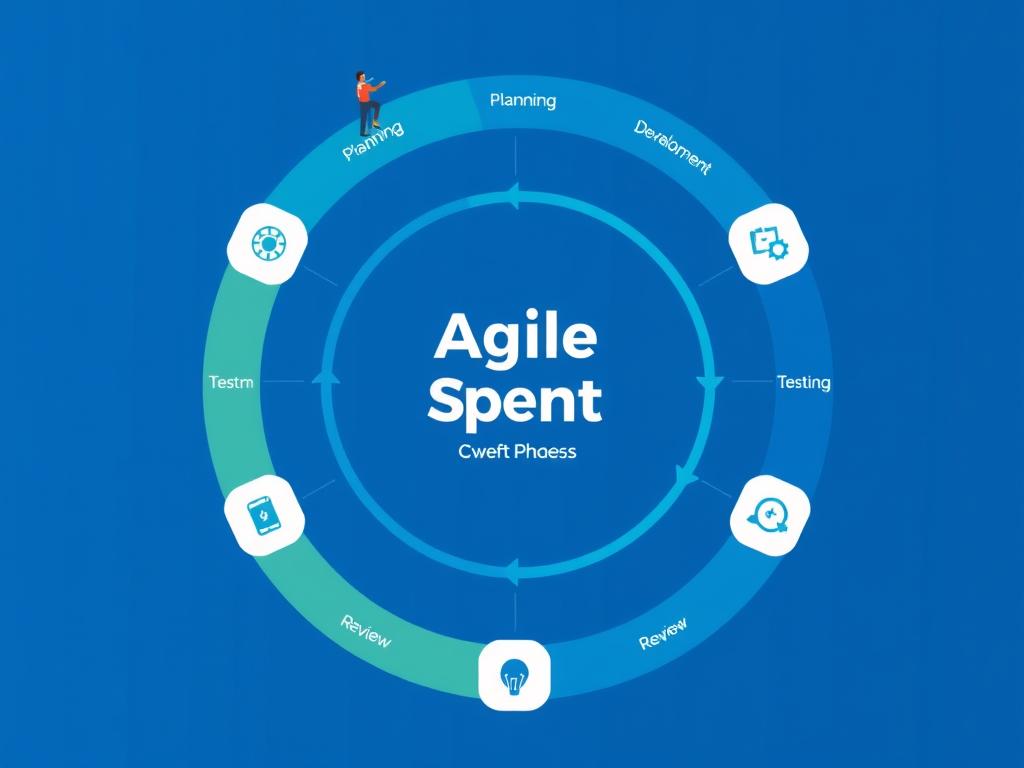
Agile takes an iterative approach, breaking projects into smaller cycles called “sprints.” Each sprint delivers a working piece of the website, allowing for continuous feedback and adaptation.
Agile Advantages
Adaptable to changing requirements
Regular client feedback throughout the process
Earlier detection of issues and problems
Continuous improvement of the product
Agile Disadvantages
Less predictable timeline and budget
Requires more client involvement
Documentation may be less comprehensive
Can lead to scope creep without proper management
Common Tools in Traditional Approaches
Design Tools
Figma – collaborative interface design tool
Adobe XD – UI/UX design and prototyping
Sketch – digital design for Mac users
InVision – prototyping and collaboration
Development Tools
Front-end: React, Angular, Vue.js
Back-end: Node.js, Python, PHP
CMS: WordPress, Drupal, Shopify
Version control: Git, GitHub
Struggling with your current web development process?
Our team can help you identify bottlenecks and suggest improvements to your current workflow, even if you’re not ready for a full project yet.
At Defyn, we’ve developed a hybrid methodology that takes the best elements of traditional approaches while eliminating their weaknesses. Our process is built around three core principles: integration, iteration, and client partnership.
Integrated Design-Development Collaboration
Unlike traditional models where designers hand off completed work to developers, our designers and developers collaborate from day one. This integration offers several advantages:
Technical feasibility is assessed during the design phase, not after
Developers provide input on performance implications of design choices
Designers understand technical constraints before finalising concepts
Shared ownership leads to better solutions and fewer revisions
“The magic happens when designers understand development constraints and developers appreciate design principles. At Defyn, we’ve created a culture where these disciplines don’t just coexist—they enhance each other.”
— Defyn’s Creative Director
Iterative Prototyping and Validation
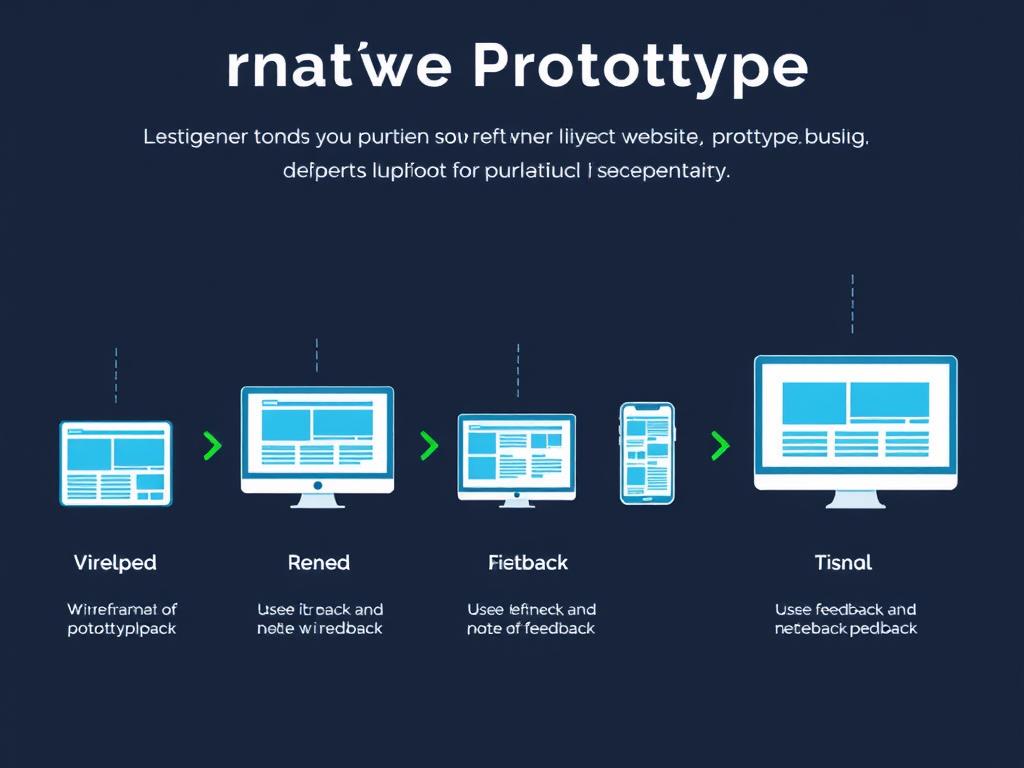
We believe in showing, not just telling. Our process includes early, functional prototypes that allow clients to experience their website before full development:
Interactive wireframes – test navigation and information architecture
Design prototypes – validate visual direction and user experience
Functional prototypes – test core functionality with real data
Continuous refinement – incorporate feedback at each stage
Client-Centric Partnership Model
We view our clients as partners in the creation process, not just approvers. This partnership includes:
Transparent communication through dedicated project portals
Regular strategy sessions to align on goals and priorities
Education on the “why” behind recommendations
Flexible involvement levels based on client preference
Defyn’s Technology Stack
Our approach is supported by a carefully selected technology stack that balances innovation with reliability:
Category
Primary Technologies
Benefits
Front-End
React, Next.js, TypeScript
Performance, maintainability, future-proofing
Back-End
Node.js, Python, GraphQL
Scalability, security, efficient data handling
CMS
Headless CMS (Contentful, Sanity)
Content flexibility, omnichannel delivery
Design Tools
Figma, Storybook
Collaboration, component-based design
DevOps
CI/CD, Docker, AWS/Azure
Reliability, security, scalability
Ready to experience the Defyn difference?
Let’s discuss how our integrated approach can deliver better results for your next web project.
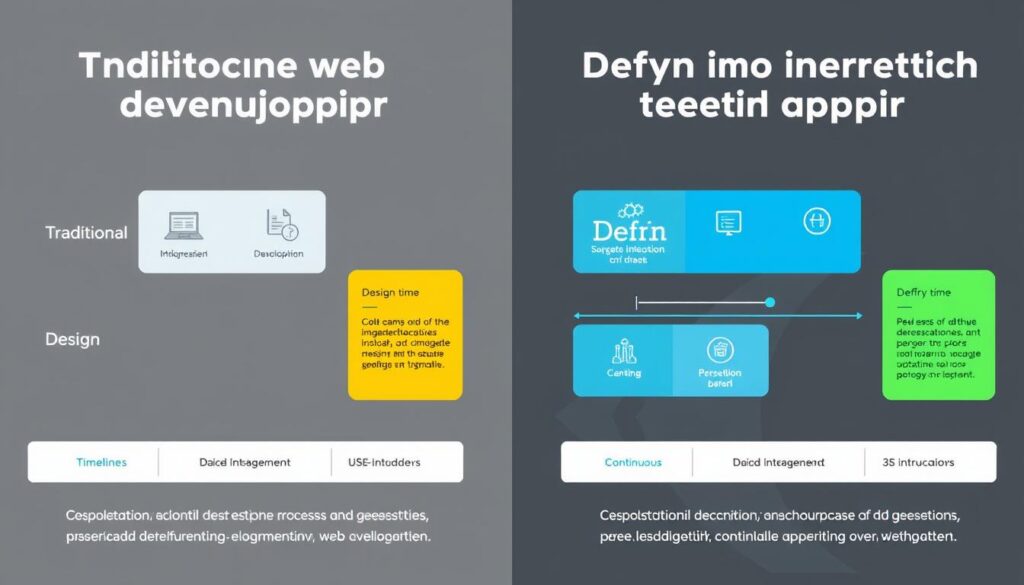
To help you understand how Defyn’s approach differs from traditional methodologies, we’ve created this comparison of key factors that impact project success.
Factor
Traditional Approach
Defyn Approach
Client Benefit
Timeline
3-6 months for medium projects
30-50% faster delivery
Quicker time to market and ROI
Revision Cycles
Major revisions after development
Continuous small adjustments
Lower costs, fewer surprises
Client Involvement
Primarily at handoff points
Regular but focused touchpoints
Greater control without overwhelming time commitment
Technical Debt
Often accumulates during rushed development
Minimised through continuous refinement
Lower long-term maintenance costs
Adaptability
Changes are costly after design phase
Flexible to evolving requirements
Product better aligned with actual needs
Knowledge Transfer
Limited to documentation handoff
Ongoing education throughout process
Better understanding and ownership of final product
Cost Efficiency Comparison
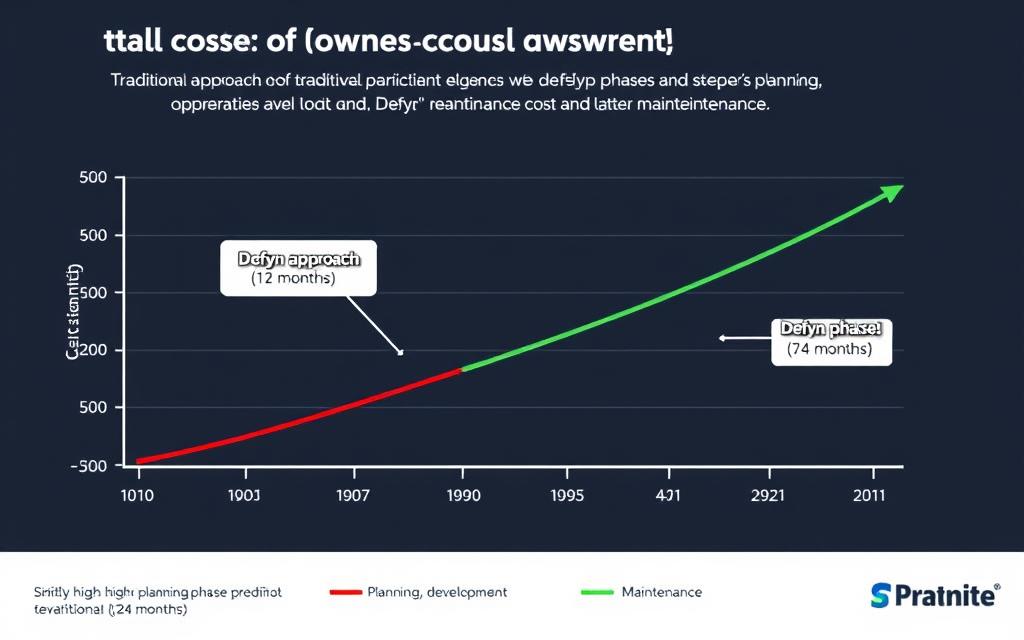
While our integrated approach may have similar upfront costs to traditional methods, the total cost of ownership is typically lower due to:
Short-Term Savings
Fewer revision cycles
Reduced development rework
More accurate initial estimates
Faster time to market
Long-Term Value
Lower maintenance requirements
Better scalability for future growth
Improved performance metrics
Higher user satisfaction and conversion
Total cost comparison over a typical 24-month website lifecycle
Case Study: Defyn Approach in Action
Website transformation for a B2B SaaS client
Client Challenge
A B2B software company approached us after two failed attempts to redesign their website with traditional agencies. Their challenges included:
Complex product offerings that were difficult to explain visually
Integration requirements with their customer portal
Need for regular content updates by non-technical staff
Tight timeline to coincide with major product launch
The Defyn Solution
We applied our integrated approach to solve these challenges:
Discovery: Joint workshops with stakeholders, customers, and our combined design-development team
Strategy: Developed information architecture and technical specifications simultaneously
Design-Development: Created functional prototypes of key sections while finalising designs for others
Implementation: Phased rollout of sections, allowing for content population while development continued
Training: Hands-on CMS training throughout the process, not just at the end
Results
Timeline
Launched in 8 weeks vs. estimated 14+ weeks with traditional approach
Performance
98/100 Google PageSpeed score, up from 62/100 on previous site
Conversion
43% increase in demo requests within first month after launch
“After two frustrating experiences with traditional agencies, working with Defyn was refreshing. Their integrated approach meant we could see progress early and make adjustments before it was too late or too expensive. The result speaks for itself—a website that truly represents our brand and converts visitors into leads.”
— Marketing Director, B2B SaaS Client
Want to see more examples of our approach?
Explore our portfolio to see how we’ve helped businesses like yours achieve their digital goals.
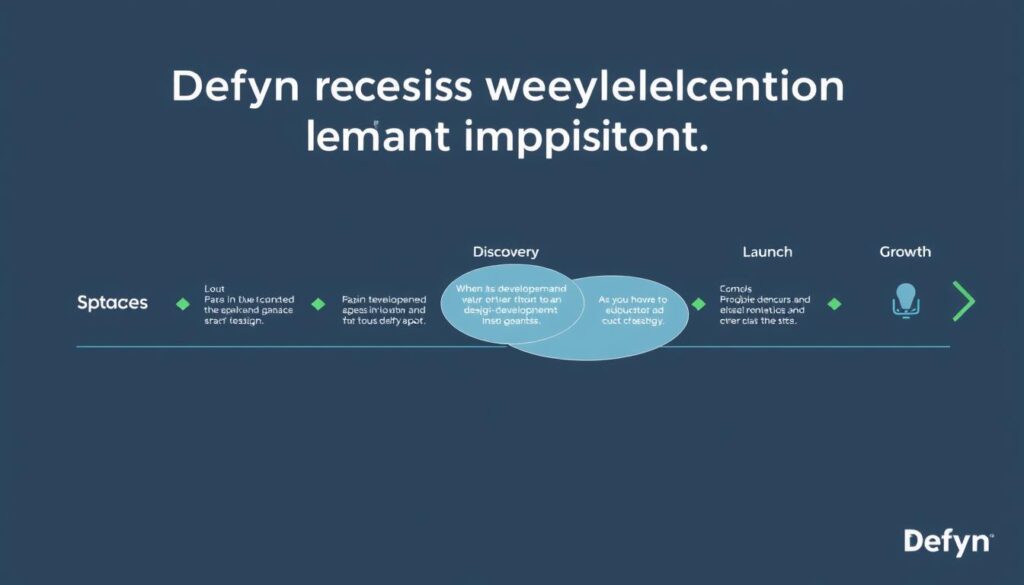
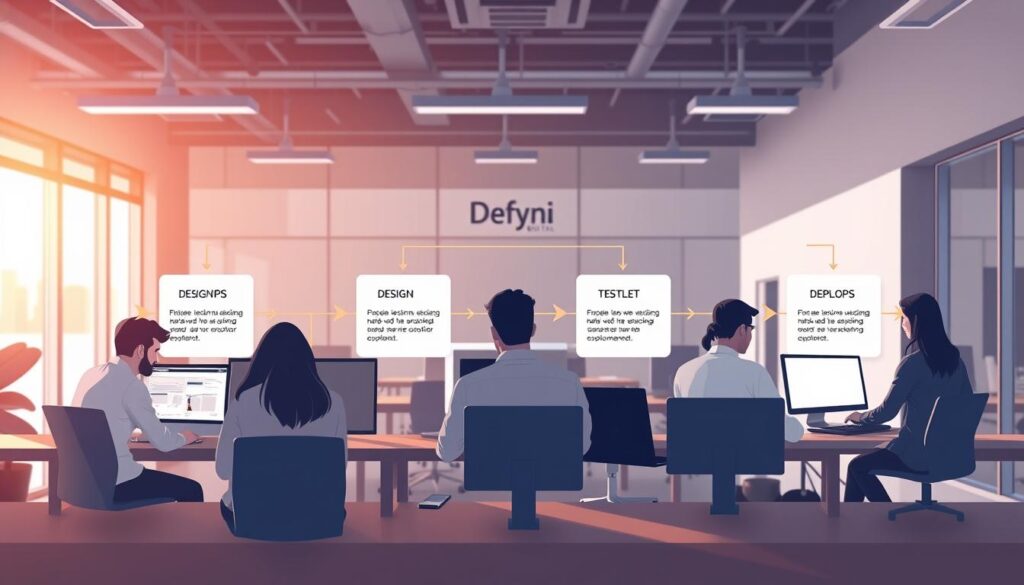
Our implementation process follows five key phases, each designed to maximise efficiency while maintaining quality. Unlike traditional approaches where phases are strictly sequential, our phases often overlap to accelerate delivery.
1. Discovery and Strategy
We begin with a comprehensive discovery process that involves both designers and developers:
Business goals analysis and alignment
User research and persona development
Technical requirements and constraints mapping
Content strategy and information architecture
Performance metrics definition
The outcome is a unified strategy document that guides both design and development decisions throughout the project.
2. Integrated Design-Development
Rather than completing all design before beginning development, we work in parallel tracks with continuous collaboration:
Design Track
Information architecture
Wireframing key user flows
Visual design system creation
Responsive design considerations
Animation and interaction design
Development Track
Technical architecture setup
Component library development
API and integration planning
Performance optimisation strategy
Security implementation
3. Iterative Prototyping
We create functional prototypes early in the process to validate assumptions and gather feedback:
Low-fidelity wireframes for navigation testing
Visual design prototypes for brand alignment
Functional prototypes of key features
Performance testing with real content
4. Phased Implementation
Rather than an all-at-once launch, we often implement in phases:
Core pages and functionality first
Secondary features in subsequent releases
Content migration and optimisation
Integration with marketing and analytics tools
5. Continuous Improvement
Our relationship doesn’t end at launch. We establish a growth-focused partnership:
Regular performance reviews and optimisations
User behavior analysis and UX refinements
Feature prioritisation based on data
Technology updates and security maintenance
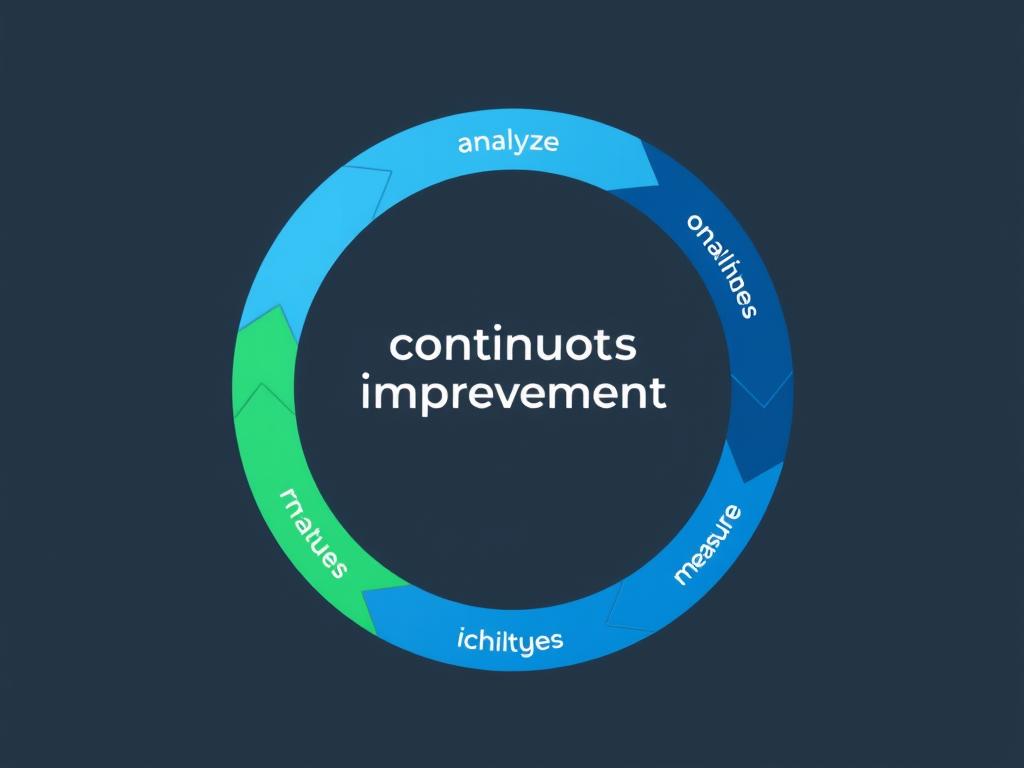
Our continuous improvement cycle ensures your website evolves with your business
The Client Experience with Defyn
Working with Defyn means experiencing a different kind of client relationship. We’ve designed our process to be transparent, educational, and collaborative without requiring excessive time commitment from your team.
What to Expect When Working With Us
Communication
Dedicated project manager as your single point of contact
Weekly progress updates via your preferred channel
24-hour response time to all inquiries
Collaboration
Shared project portal for real-time updates
Structured feedback sessions at key milestones
Clear decision-making frameworks
Transparency
Detailed timeline with dependencies highlighted
Regular budget updates and forecasts
No surprises policy for changes or challenges
Our client portal provides real-time visibility into your project’s progress
Client Testimonials
“The integrated approach meant we could see how design decisions would impact functionality early on. This saved us from making choices that would have been costly to change later.”
— Marketing Director, E-commerce Company
“What impressed me most was how the Defyn team educated us throughout the process. We didn’t just get a great website—we gained valuable insights into digital best practices.”
— CEO, Professional Services Firm
Ready to experience a better way to build your website?
Let’s discuss your project and how our approach can deliver superior results.
Our integrated approach typically reduces overall project timelines by 30-50% compared to traditional methods. By working on design and development in parallel and catching potential issues early, we eliminate the lengthy revision cycles that often delay traditional projects. Most mid-sized websites can be completed in 8-12 weeks from kickoff to launch.
Is your approach more expensive than traditional methods?
While our initial project costs are comparable to traditional agencies, clients typically see significant savings in the total cost of ownership. This comes from fewer change orders, reduced rework, and lower long-term maintenance costs. Our transparent pricing model ensures you understand exactly what you’re investing in at each stage.
How much time will our team need to commit to the project?
We’ve designed our process to be efficient with your time while still ensuring you have input on critical decisions. Typically, clients commit to a 2-hour kickoff workshop, 30-minute weekly check-ins, and 1-hour review sessions at key milestones. Our client portal also allows for asynchronous feedback that fits into your schedule.
What if we need to make changes during the project?
Our approach is designed to accommodate changes more efficiently than traditional methods. Minor adjustments can often be incorporated without timeline or budget impact. For larger scope changes, we provide clear information about the implications so you can make informed decisions. Our goal is to eliminate surprises while maintaining flexibility.
How do you handle website maintenance after launch?
We offer flexible maintenance plans tailored to your needs. All clients receive a 30-day warranty period after launch for any issues. Beyond that, our growth-focused maintenance plans include regular updates, security monitoring, performance optimisation, and strategic improvements based on user data and business goals.
Why Choose Defyn’s Web Design and Development Approach
The digital landscape continues to evolve at a rapid pace, and traditional web development methodologies often struggle to keep up. Defyn’s integrated approach offers a better way forward—one that delivers superior results while respecting your time and budget.
By choosing Defyn, you’re not just getting a website—you’re partnering with a team that’s committed to your digital success. Our approach combines the best of design thinking and technical excellence to create websites that not only look stunning but also perform exceptionally well.
Whether you’re launching a new website, redesigning an existing one, or looking to improve your digital presence, our integrated methodology provides the framework for success. We invite you to experience the Defyn difference for yourself.
Ready to transform your web presence?
Contact us today to discuss your project and discover how our approach can help you achieve your digital goals.
Did you know 73% of Australian businesses admit their current digital solutions fail to meet evolving customer expectations? This gap often stems from mismatched technical capabilities and unclear communication between developers and decision-makers.
We understand the frustration of working with teams that prioritise code over clarity. Many agencies focus solely on programming without aligning outcomes with commercial goals. Our approach flips this script.
From straightforward websites to intricate data-driven systems, we specialise in translating complex requirements into intuitive digital experiences. Our developers work alongside you to ensure every application or design element serves your business strategy.
Struggling with rigid templates or unresponsive support? We replace cookie-cutter solutions with tailored systems built for Australian market needs. Unlike typical agencies, we measure success by your growth – not just technical checklists.
Key Takeaways
Tailored solutions outperform generic templates in meeting business objectives
Technical expertise paired with commercial awareness drives better results
Scalable systems adapt to changing market demands and user needs
Direct collaboration prevents miscommunication common in developer relationships
Proven methodologies reduce project risks and implementation timelines
When others see coding challenges, we see opportunities to strengthen your digital foundation. Let’s discuss how to transform your vision into reality – contact hello@defyn.com.au for solutions that grow with you.
Introduction to Defyn Digital’s Expertise
Australian businesses often face a critical choice: settle for generic digital tools or invest in tailored systems. We bridge this gap by combining technical precision with strategic business alignment.
Overview of Our Digital Edge
Our team merges design thinking with robust coding practices. While others treat aesthetics and functionality separately, we integrate both from day one. This approach eliminates costly reworks and ensures seamless user experiences.
Three pillars define our methodology:
Focus Area
Traditional Approach
Defyn’s Solution
Technical Implementation
Template-driven systems
Custom-built frameworks
Client Collaboration
Limited developer access
Direct expert communication
Outcome Measurement
Code completion metrics
Business growth tracking
Contact Support for Customisation Challenges
Stuck with rigid templates or unresponsive teams? Our experts decode technical jargon into actionable steps. Email hello@defyn.com.au for:
Same-day responses to coding queries
Tailored solutions using modern frameworks
Ongoing project management support
We transform “it can’t be done” into “launched ahead of schedule”. Let’s build systems that adapt as fast as your market evolves.
The Evolution of the Digital Landscape
Over three decades, the internet’s evolution has redefined how businesses connect with audiences. What began as static pages now drives personalised experiences that anticipate user needs.
From Web 1.0 to Web 3.0 Milestones
Tim Berners-Lee’s 1989 invention at CERN laid the groundwork with HTTP, HTML, and URI protocols. These foundations powered Web 1.0’s read-only environment, where businesses shared basic content without interaction.
The shift to Web 2.0 transformed passive viewers into active participants. Platforms began fostering two-way communication, enabling features like user comments and social sharing. This era taught us the value of collaborative digital spaces.
Today’s Web 3.0 leverages metadata and machine learning to deliver context-aware experiences. Our team builds systems that adapt to individual preferences, browsing patterns, and real-time data. This approach moves beyond generic templates to create truly responsive solutions.
Three critical lessons guide our work:
Foundational protocols remain vital for system stability
User engagement drives platform longevity
Personalisation requires ethical data practices
We help Australian businesses transition smoothly between web generations. By blending time-tested markup language principles with emerging technologies, we future-proof digital assets while maintaining backward compatibility.
Understanding the Web Development Process
How do successful digital platforms maintain their competitive edge? A structured web development process forms the backbone of every high-performing website and application. Our seven-phase methodology transforms ideas into functional solutions while minimising costly missteps.
Analysis, Planning and Strategy
We start by mapping your commercial objectives to technical requirements. Our team conducts feasibility assessments covering:
Technology stack compatibility
User journey mapping
Risk mitigation strategies
Phase
Key Actions
Outcome
Analysis
Goal alignment workshops
Clear success metrics
Planning
Wireframe development
Visual project blueprint
Strategy
Resource allocation plan
Realistic timelines
Design, Development and Testing Phases
Our user-first design approach ensures interfaces drive engagement. During development, we implement:
Responsive coding standards
Cross-browser compatibility checks
Performance optimisation
Rigorous testing protocols identify issues before launch. We validate every feature across devices and user scenarios, ensuring seamless functionality from day one.
Key Technologies Shaping Modern Web Development
The right technology stack can make or break your online presence. We combine proven tools with emerging innovations to build systems that drive engagement and growth. Our approach balances technical excellence with practical business outcomes.
Front-End Innovations and Frameworks
User experience begins with robust foundations. We craft interfaces using:
HTML for precise content structure
CSS for consistent visual branding
JavaScript for dynamic interactions
Modern frameworks accelerate delivery without compromising quality. Our team specialises in:
Framework
Best For
Performance
React
Scalable applications
Virtual DOM efficiency
Angular
Enterprise systems
Two-way data binding
Vue.js
Rapid prototyping
Lightweight execution
Back-End Solutions and Database Management
Powerful functionality requires solid architecture. We implement server-side solutions using:
Python for machine learning integration
Ruby for rapid API development
PHP for legacy system compatibility
Data handling separates good systems from great ones. Our database expertise covers:
MySQL for relational structures
MongoDB for flexible NoSQL needs
PostgreSQL for complex queries
We match programming languages and storage solutions to your specific operational demands. This ensures scalability while maintaining peak performance as user bases grow.
Mastering Web Development: Strategies for Success
What separates functional systems from truly transformative digital solutions? It’s the marriage of precision coding with strategic foresight. We craft solutions that evolve alongside your business, whether you’re scaling enterprise operations or refining niche offerings.
Building Scalable Foundations
Our approach adapts to your needs. For complex projects, we deploy cross-functional teams versed in Agile methodologies. Smaller ventures receive focused attention from full-stack experts. This flexibility ensures every solution aligns with operational demands.
Key differentiators in our practice:
Modular code architecture for easier updates
Cross-browser compatibility testing across devices
Automated deployment pipelines reducing human error
Aspect
Common Practice
Our Standard
Code Review
Post-development checks
Real-time peer validation
Documentation
Basic notes
Interactive knowledge bases
Security
Standard protocols
Penetration testing
Front-end specialists focus on intuitive user journeys while back-end developers ensure robust server-side performance. We bridge these domains through:
Daily stand-ups aligning both teams
Shared version control systems
Unified performance metrics
Our commitment extends beyond launch dates. We implement monitoring tools that track system health, user behaviour patterns, and security threats. This proactive stance prevents issues before they impact operations.
Customised Solutions That Set Defyn Digital Apart
Why do 68% of Australian businesses report dissatisfaction with their current digital platforms? Off-the-shelf solutions often force companies into rigid frameworks that stifle growth. We craft systems that mirror your operational DNA.
Our team thrives on projects others deem too niche or complex. Whether building secure payment gateways for e-commerce ventures or membership portals for professional networks, we prioritise functionality that drives measurable outcomes.
Tailored Web Customisation and Developer Collaboration
Generic platforms create three common pain points:
Mismatched features wasting budget
Inflexible architectures resisting updates
Disconnected teams causing delays
We combat these through co-development processes. Our specialists integrate with your internal teams using shared project boards and weekly syncs. This transparency prevents the “black box” frustration many businesses experience with external developers.
Recent client results showcase our approach:
Challenge
Standard Fix
Our Solution
Legacy system integration
Complete rebuild
API middleware layer
Multi-department workflows
Separate platforms
Unified access portal
Struggling with incompatible features or unresponsive developers? Email hello@defyn.com.au for:
Same-day technical consultations
Hybrid teams blending in-house/external expertise
Future-proof scaling strategies
We transform “this doesn’t work for us” into “this feels made for us”. Let’s prove how bespoke solutions outperform template-based approaches every time.
Integrating Best Practices for Ultimate Digital Performance
Digital leaders don’t settle for temporary fixes or isolated solutions. We combine Agile methodologies with continuous refinement to create systems that evolve alongside your operations. This approach bridges front-end engagement with robust back-end architecture, ensuring every component works toward shared objectives.
Leveraging Agile Methodologies and Continuous Improvement
Our teams deploy fortnightly sprints to align technical builds with shifting priorities. Daily stand-ups and shared dashboards maintain transparency across designers, developers, and stakeholders. This rhythm prevents feature creep while adapting to emerging user needs.
Post-launch optimisation separates good platforms from great ones. We implement:
Real-time performance monitoring across servers
Quarterly security audits for management systems
User behaviour analysis to guide updates
Our full-stack expertise ensures database structures support front-end ambitions. Whether refining applications or scaling infrastructure, we balance technical precision with commercial awareness. This dual focus helps Australian businesses stay ahead in competitive markets.
Ready to transform your digital capabilities? Email hello@defyn.com.au for solutions that grow through every iteration.
FAQ
What makes Defyn Digital’s approach to digital solutions different?
We combine strategic planning with technical excellence, prioritising scalable architectures and user-centric design. Our team integrates emerging technologies like AI-driven analytics while maintaining rigorous compliance with Australian data security standards.
How do you handle the website creation process?
Our methodology follows three core phases: discovery sessions to align business goals, iterative prototyping for user experience validation, and performance-optimised deployment. We use tools like Figma for design collaboration and Jira for agile project tracking.
Which programming frameworks does your team specialise in?
For front-end projects, we leverage React.js and Vue.js with TypeScript. Our back-end expertise includes Node.js and Python Django, paired with database solutions like MongoDB or PostgreSQL based on specific data structure requirements.
Can you create custom features beyond standard templates?
Absolutely. We’ve developed bespoke inventory management systems, real-time chat modules using WebSocket, and API integrations with Xero/Myob for Australian businesses. Our developers tailor solutions to operational workflows rather than forcing predefined templates.
What ongoing support do you provide post-launch?
Our care plans include monthly performance audits, security patch management, and content updates. For complex platforms, we offer SLA-backed support with guaranteed 4-hour response times during business hours across Australian time zones.
How do you ensure websites meet accessibility standards?
We implement WCAG 2.1 AA compliance through semantic HTML5 markup, ARIA labels, and contrast-optimised colour schemes. All projects undergo automated testing using Axe Core and manual screen reader checks with NVDA/JAWS.
Do you handle domain hosting and SSL configuration?
Yes. We manage Australian-based hosting through AWS Sydney regions, configure Cloudflare Enterprise CDN, and implement OV/EV SSL certificates. Clients receive full access to hosting controls with 24/7 uptime monitoring included.
What analytics integration do you recommend?
Beyond Google Analytics 4, we set up custom BigQuery pipelines for enterprise clients. For privacy-focused businesses, we implement Matomo with Australian data residency and GDPR-compliant tracking configurations.
As marketers, we often think about our brand’s core. It’s like we’re building a legacy that touches our audience. The brand marketing strategy we use is key to building strong relationships. It’s not just about selling; it’s about telling a story that matches our customers’ dreams.
This strategy helps us stand out in a busy market. It’s like a guiding light through the noise of competition.
We’ll look at what makes a brand marketing strategy effective. We’ll see how it boosts our brand’s visibility and connection with customers in Australia. We’ll learn how the right marketing techniques can lead to better customer loyalty and a market edge.
Key Takeaways
Understanding the importance of a well-defined brand marketing strategy.
Recognising the impact of brand visibility on customer relationships.
The role of effective brand strategies in fostering loyalty.
How marketing techniques can differentiate us in the market.
Key benefits of a strong brand presence in Australia.
Understanding Brand Marketing Strategy
To truly understand brand marketing, we need a clear brand strategy definition. It’s more than just logos or colours. It’s about how we show our products, services, and values to people. When done well, it creates a strong bond with our audience.
Defining Brand Marketing
Brand marketing is about making a good impression on people. It’s about being unique in the market. By knowing what our brand is all about, we build trust and loyalty.
The Importance of Strategy in Branding
A good branding strategy is key. It helps us deal with market challenges. It makes sure all our marketing efforts match our big goals. In a crowded market, a strong strategy is essential for success.
Components of a Successful Brand Strategy
Building a strong brand strategy needs several key parts. These parts work together to shape our brand’s identity and success in the market. By doing thorough market research and setting clear brand goals, we lay the groundwork for lasting success.
Market Research and Analysis
Market research is the core of our brand strategy. It helps us understand what our customers like, how they behave, and what trends are out there. This way, we can respond to the market better.
By analysing our competitors and what our audience likes, we find new ways to innovate. Using market research insights, we make smart choices that boost our brand.
Setting Clear Objectives
Having clear brand objectives is key to guiding our actions. These goals match our business aims, creating a unified strategy for growth. Specific targets help us see how we’re doing and make changes if needed.
Well-defined brand objectives help us build a brand that meets our dreams and connects with our audience.
The Role of Brand Identity
Understanding brand identity is key in today’s market. It’s the base for brand image creation, letting brands share their values and connect with people. A solid brand identity includes visuals, messages, and feelings linked to the brand. This unity shapes how people see and interact with the brand.
Creating a Meaningful Brand Image
Good brand image creation sends strong messages that hit home with our audience. We aim to grasp what our customers like and do, making our images, logos, and slogans true to our brand. A strong brand image draws in customers, builds loyalty, and earns trust over time.
Consistency in Brand Presentation
Keeping consistency in branding is key to strengthening our brand identity. Being the same everywhere—social media, packaging, or ads—helps customers spot and connect with our brand. This consistency builds trust and loyalty, vital for lasting success.
Aspect
Importance
Impact on Business
Brand Identity
Core foundation of brand
Increases recognition and differentiation
Brand Image Creation
Visual and emotional representation
Enhances customer attraction and connection
Consistency in Branding
Uniformity across all platforms
Builds trust and loyalty
Developing a Digital Branding Approach
In today’s world, having a strong digital branding strategy is key. It helps us connect with our audience in a real way. We look at how to use social media and SEO to boost our online presence.
Leveraging Social Media Platforms
Social media is a powerful tool for making our brand known and engaging with people. Here are some ways to use it:
Create compelling content: Good visuals and stories can start conversations about our brand.
Interact with followers: Talking back to our audience builds trust and loyalty.
Utilise paid promotions: Ads can help us reach more people and attract new customers.
Utilising SEO for Brand Visibility
Using SEO helps us be seen more online. Our strategy includes:
Keyword optimisation: Using the right keywords helps us rank higher on search engines.
Quality backlinks: Working with trusted sites makes us more credible.
Regular content updates: Fresh content keeps people coming back and search engines happy.
Key Marketing Techniques for Brand Development
In the fast-changing world of brand development, we use marketing techniques to connect with our audience. Content marketing and email marketing are key to a successful strategy. They help us build strong relationships with customers and grow our market presence.
Content Marketing Strategies
Content marketing is a strong tool for building trust in our brand. It helps us attract and keep a loyal audience. This method boosts our online presence and builds long-term loyalty. Successful content marketing includes:
Creating informative blog posts that solve customer problems.
Using videos and infographics to make information fun and easy to understand.
Applying SEO best practices to rank higher in search results and attract more visitors.
Email Marketing as a Tool for Engagement
Email marketing is a powerful way to keep customers engaged from start to finish. Personalised emails make customers feel connected and more likely to interact with our content. To get the most from email marketing, try these strategies:
Segmentation – Send messages that match what customers like and do.
Compelling subject lines that grab attention and boost open rates.
Regular newsletters with valuable info, deals, and updates to keep our brand in mind.
Technique
Description
Benefits
Content Marketing
Creating valuable, relevant content to engage our audience.
Builds authority, trust, and online visibility.
Email Marketing
Personalised outreach to encourage customer interaction.
Enhances customer engagement and fosters loyalty.
Integrated Marketing and Communication Strategies
In today’s fast-changing marketing world, an integrated marketing strategy is key. We need to make sure our branding is the same everywhere. This helps us connect with our audience better, both online and offline.
This consistency makes our customers’ experience smoother and builds trust. It’s all about creating a seamless brand experience.
Aligning Offline and Online Efforts
Bringing together offline and online marketing is a great chance for brands to shine. It lets us send out strong messages that our audience can relate to. Here are some important steps for successful alignment:
Consistent Messaging: Keep your messages the same everywhere to make your brand more recognisable.
Unified Visual Identity: Make sure logos, colours, and designs match your brand’s look.
Cross-Promotion: Get people to interact with your offline and online campaigns, like using social media in stores.
Integrated Analytics: Use tools to track how well your offline and online marketing are doing.
When offline and online marketing work together, we get a stronger brand story. This story grabs people’s attention and builds loyalty. Customers love seeing a brand that’s consistent, which leads to stronger connections and success.
Marketing Channel
Role in Brand Strategy
Benefits of Integration
Social Media
Engage audiences with interactive content
Increased brand visibility and customer interaction
Email Campaigns
Direct communication with targeted messaging
Higher conversion rates and customer retention
Print Advertising
Establish credibility and reach untapped audiences
Strengthened brand recall and trust
Events and Promotions
Create memorable experiences and personal connections
Enhanced community engagement and loyalty
Brand Marketing Strategy in Practice
Looking at real-life brand marketing successes around the world is key. Effective branding case studies give us great insights. They show us how to create strategies that really work.
Case Studies of Effective Brand Strategies
Many brands have shown us how to do it right. Coca-Cola and Nike are great examples. They’ve mastered the art of storytelling, making deep connections with their customers.
We can learn a lot from how they’ve used their stories. This helps them stand out in the market and keep customers coming back.
Lessons Learned from Successful Campaigns
Learning from these successful branding efforts is important. We can find out what makes them tick. For example:
Emotional Engagement: Connecting on an emotional level often results in a lasting impression.
Consistency: Keeping a consistent brand image across all platforms helps with recognition and trust.
Social Responsibility: Brands that show they care about social issues win over more customers.
Using these lessons in our marketing plans makes our strategies better and more engaging.
Brand
Strategy
Key Takeaways
Coca-Cola
Emotional Storytelling
Builds strong emotional connections
Nike
Empowerment Messaging
Encourages consumer involvement and loyalty
Patagonia
Sustainability Focus
Attracts socially-conscious consumers
Measuring the Success of Brand Strategies
To improve our brand strategies, we must use effective ways to measure success. Knowing the right key performance indicators (KPIs) for branding is key. These KPIs help us understand how our branding is doing. They guide our decisions and help us set goals.
Tracking Key Performance Indicators (KPIs)
Finding the right KPIs for branding is vital. Here are some important KPIs to track:
Brand Awareness: Shows how well our target audience knows our brand.
Brand Sentiment: Checks how people feel about our brand through surveys and social media.
Customer Engagement: Tracks interactions to understand consumer behaviour.
Market Share: Shows our position compared to competitors.
Conversion Rates: Measures how well our branding leads to sales and leads.
Tools for Monitoring Brand Impact
There are many brand impact monitoring tools to help us track. These tools let us dive deep into data and tweak our strategies. Some top tools include:
Tool
Functionality
Google Analytics
Tracks website traffic and user behaviour related to branding efforts.
Hootsuite
Manages social media channels while monitoring brand engagement and sentiment.
SurveyMonkey
Collects customer feedback to assess brand perception and awareness.
Brandwatch
Provides in-depth social listening analytics to track brand mentions.
By using these KPIs and tools, we can focus better on our branding goals. This leads to a stronger market presence.
Adjusting Your Marketing Strategy Planning
In today’s fast-paced world, we must be ready to change our marketing plans. This is because consumer tastes and market conditions keep shifting. By keeping an eye on these changes, we can grab new chances and avoid risks.
Responding to Market Changes
As trends and what people want change, we need to adapt quickly. This means we can make our products and messages better. We do this by checking market data and what our competitors are doing.
Some good strategies include:
Doing market analysis as it happens
Using customer feedback to improve services
Watching what our competitors are doing
Iterative Improvements and Feedback Loops
It’s key to keep making our marketing strategy better. By using feedback loops, we can learn from our campaigns and what customers say. This helps us make our strategies even stronger over time.
Getting data from surveys and analytics
Seeing how changes affect customer interest
Changing our plans based on how well they work
By always working on these steps, our marketing strategy stays fresh and effective. This way, we can really connect with our audience.
Strategy
Action Steps
Expected Outcome
Real-time Market Analysis
Evaluate current trends
Informed decision-making
Customer Feedback Collection
Implement surveys after campaigns
Enhanced customer satisfaction
Performance Assessment
Review marketing metrics
Higher engagement rates
The Importance of Brand Communication Strategy
A good brand communication strategy is key to our marketing success. It makes sure our values, mission, and what we offer connect with our audience. We look at the important parts of messaging and engaging with our audience to keep strong brand relationships. This helps us build trust and loyalty.
Crafting Effective Message Delivery
It’s vital to talk to our audience clearly and with purpose. Good messaging shows who we are and what we offer. By focusing on what makes us different, we grab attention and spark interest. Here are some ways to improve message delivery:
Understanding audience insights: Tailoring messages to fit demographic preferences and behaviours.
Utilising storytelling: Connecting emotionally through compelling narratives that illustrate our brand’s journey.
Being consistent: Ensuring that all messaging aligns with our core values across various platforms.
Engaging Your Audience Meaningfully
Strong audience engagement is more than just sending messages. We need to listen and join in on conversations that matter to our customers. Here are some strategies for better audience engagement:
Interactivity: Encouraging feedback and participation through surveys, polls, or social media interactions.
Personalisation: Customising communication to meet individual preferences and foster a sense of belonging.
Building communities: Creating spaces where audiences can connect with each other and our brand.
Conclusion
In conclusion, we’ve looked at what makes a brand marketing strategy work. We’ve seen how important brand identity and integrated communication are. Each part helps shape how we present our brands to the world.
Understanding our audience is key. We need to connect with them on a deeper level. This makes our strategies more effective.
Looking back, it’s clear that businesses need to use these branding elements. By doing so, we can make our brands stronger. This is true, even in the competitive Australian market.
By taking a careful approach, we can engage with our audience better. This leads to growth that lasts.
If you want to improve your brand marketing, contact us at hello@defyn.com.au. We’re here to help. Together, we can tackle branding challenges and create a winning strategy for your business.
FAQ
What is a brand marketing strategy?
A brand marketing strategy is a detailed plan. It shows how a brand will connect with its audience and meet its marketing goals. It aims to increase visibility, boost loyalty, and stand out from competitors through different marketing tactics.
Why is understanding brand marketing important?
Understanding brand marketing is key. It helps shape how people see our brand and build trust. A solid strategy ensures we work together towards our business goals.
What are the essential components of a successful brand strategy?
A good strategy needs thorough market research and clear goals. It also requires a strong brand identity. These parts help us create a plan that speaks to our audience and grows our brand.
How do we create a meaningful brand identity?
To create a strong brand identity, we define our vision and values. We also develop a unique visual style. Ensuring consistency across all interactions helps us stand out and keep customers loyal.
What is involved in developing a digital branding approach?
Developing a digital branding approach means using social media and SEO. These tools help us connect with our audience in the digital world.
What are key marketing techniques for brand development?
Key techniques include content marketing and email marketing. These methods help us build trust and strengthen our relationships with customers.
How does integrated marketing benefit our brand strategy?
Integrated marketing makes our brand experience seamless. It aligns our offline and online efforts. This ensures our message is clear and effective in engaging our audience.
Can you provide examples of effective brand marketing strategies?
Yes! We look at case studies of successful strategies. These examples show how brands have made a mark and offer lessons for our own plans.
How can we measure the success of our brand strategies?
We track key performance indicators (KPIs) to measure success. Using tools to monitor our impact helps us make smart decisions and improve our strategies.
What does it mean to adjust our marketing strategy planning?
Adjusting our planning means staying on top of market changes and what our customers want. We make ongoing improvements and listen to feedback to keep our strategies relevant.
Why is a brand communication strategy important?
A strong communication strategy is vital. It helps us share our brand’s values and what we offer. This builds meaningful connections with our audience, essential for loyalty and lasting relationships.